Our powerful Locate & Explain feature helps you Locate the exact answer in the passage and clearly Explain why it's correct.
Feature Explore More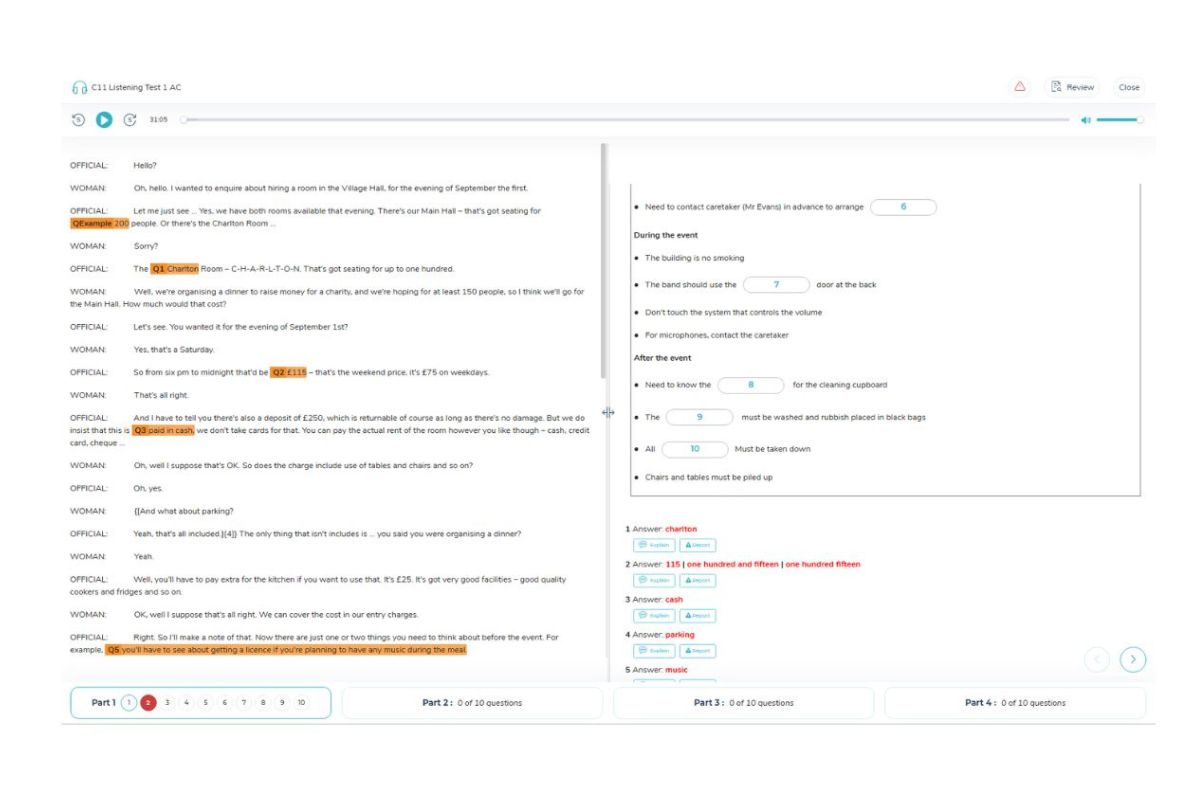
Quickly switch between questions and save time—focus more on practice, not scrolling.
Feature Explore More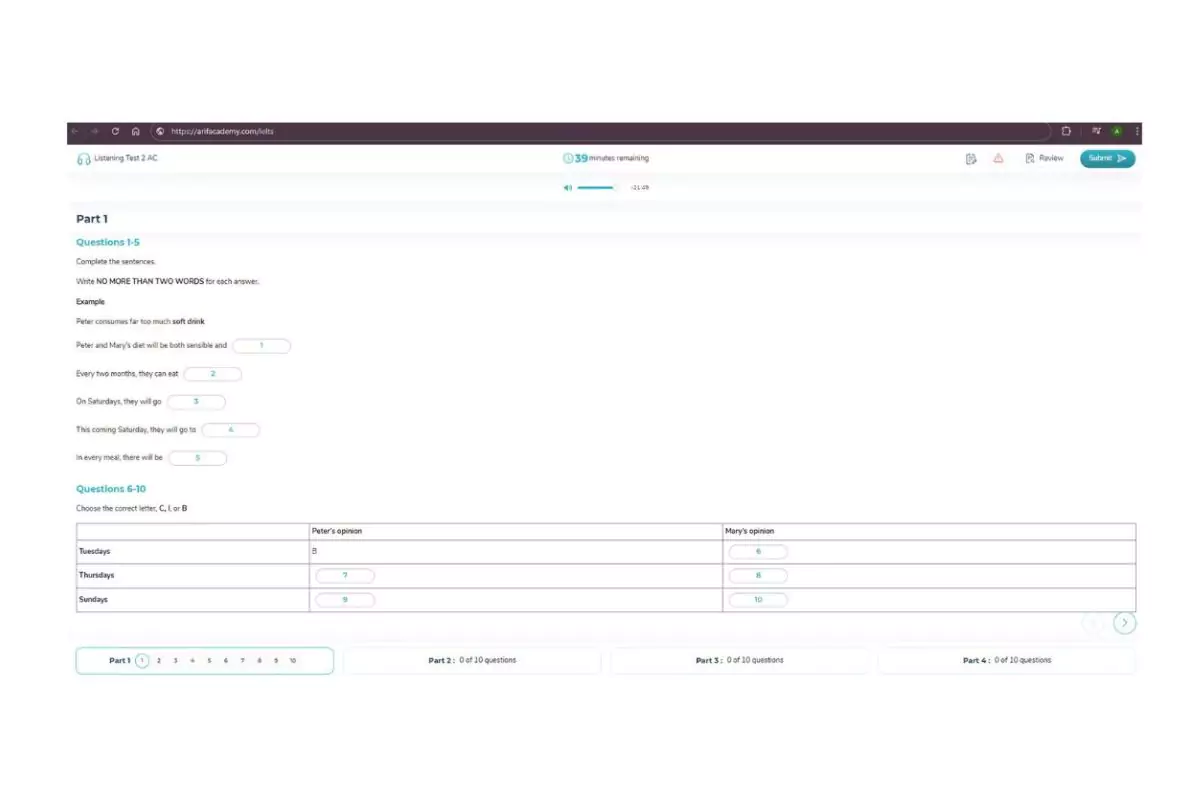
Get an instant band score as soon as you submit your practice test. Your score is automatically calculated based on your correct answers.
AI Try Listening Eval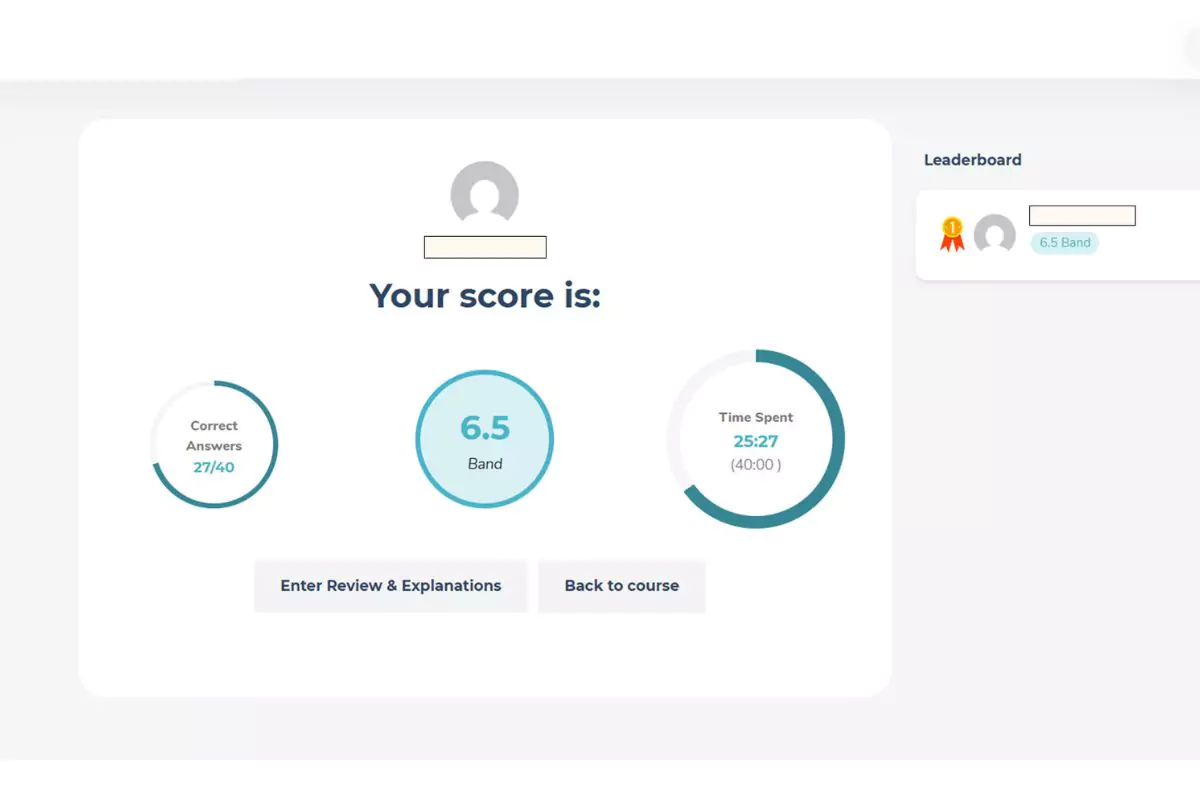
Our powerful Locate & Explain feature helps you Locate the exact answer in the passage and clearly Explain why it's correct.
Feature Explore MoreTake quick notes and highlight text while reading—perfect for active learning and better focus.
Feature Explore MoreGet an instant band score as soon as you submit your practice test. Your score is automatically calculated based on your correct answers.
AI Try Listening EvalUnderstand the format, build your ear, check your band score and actually feel ready before test day.
Computer Based IELTS Listening Mock Test, CD IELTS Practice, IELTS Band Score, IELTS Bangladesh, Free IELTS Test Online.
Let me be honest with you, the computer-based IELTS listening test is not as scary as it looks. I have seen hundreds of students from Bangladesh walk into the test center feeling completely lost and then walk out with a Band 7 or higher. The difference? They practiced the right way.
This page is here to help you do exactly that. Whether you are preparing for study abroad, a visa application, or a job requirement, the listening section is one part of IELTS where you can score really well if you know what is going on. So let me walk you through everything, step by step.
So, what exactly is it? You sit at a computer, put on noise-cancelling headphones, and listen to four recordings. After each recording or sometimes during it you answer questions directly on screen. No pen, no paper, answer sheet. You just click, type, or select.
The whole listening section takes about 30 to 36 minutes. That is it no extra 10-minute transfer time like in the paper test. In the paper-based IELTS, you write your answers on a rough sheet first, then copy them over. In the computer version, that step is gone. You get 2 minutes at the end to review your answers instead.
Honestly, I think this is actually an advantage. Less time wasted on transferring, more focus on listening.
The listening test is divided into 4 parts. Each part is a bit harder than the last. Here is a clear breakdown so you know exactly what is coming:
Two people talking in an everyday situation, like booking a hotel, registering for a course, or calling a doctor's office. Form-filling questions are very common here.
One person giving information. Think: a tour guide describing a park, someone explaining a local facility. Still fairly easy.
Two to four people talking about an academic topic, students discussing an assignment with a tutor, for example. Opinions and ideas are important here.
One speaker is giving a lecture on an academic subject. This is the hardest section. The vocabulary is more complex, and the information is denser. Each section has 10 questions, for a total of 40. You hear each recording only once. That is why practice is so important, your ear needs to be trained.
I always tell students in Bangladesh: if you are comfortable using a keyboard and typing in English, the computer-based test is honestly the better option. You get results faster, there are more test dates, and there is no messy handwriting issue.
One of my students, Runa from Dhaka, kept missing answers in Section 4, not because her English was bad, but because she panicked when the lecturer started using complex vocabulary. We spent two weeks doing nothing but Section 4 practice tests on a computer. By her actual test day, she was calm. She scored Band 8 in listening.
There are 6 main question types in the computer based IELTS listening test. You need to be familiar with all of them. Honestly, if you have never tried these on a computer before, they can feel a bit confusing at first — even if your English is strong.
You select one or more correct answers from a list. Sometimes you pick one, sometimes two or three. Read the question carefully.
You fill in missing words, numbers, or names. There is almost always a word limit, usually "no more than two words and/or a number."
Answer a direct question in a few words. Numbers, names, and spellings matter a lot here. Be precise.
Complete a sentence using words from what you hear. Again, word limit applies.
Match a list of items to a set of options. Common in Sections 2 and 3. Read both lists before the audio starts.
You label parts of a map, floor plan, or diagram using words from the recording. These are actually not as hard as they look just follow the audio carefully.
You answer 40 questions. Each correct answer is worth one mark. Your raw score is then converted into a band score between 0 and 9. Here is the general guide:
| Correct Answers | Band Score | What It Means |
|---|---|---|
| 39–40 | 9.0 | Expert level |
| 37–38 | 8.5 | Very advanced |
| 35–36 | 8.0 | Strong proficiency |
| 32–34 | 7.5 | Above average |
| 30–31 | 7.0 | Good — required by most universities |
| 26–29 | 6.5 | Competent |
| 23–25 | 6.0 | Modest |
| 18–22 | 5.5 | Limited |
Most universities in Canada, Australia, the UK, and the USA need at least a Band 6.5 or 7.0 in listening. If you are aiming for a UK visa or skilled migration to Australia, check the specific band requirement for your situation.
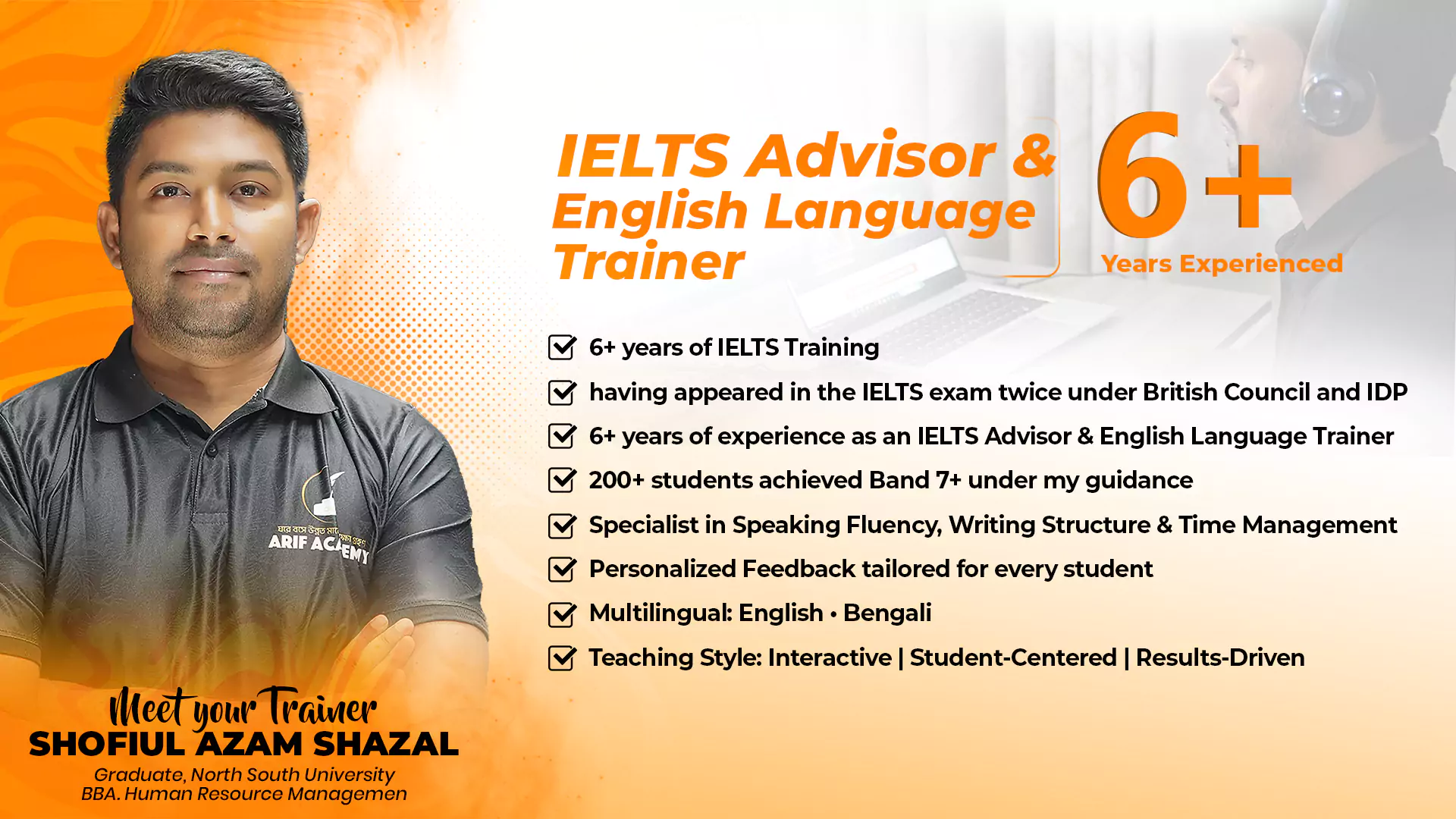
I am going to be real here. These are the tips that actually work the ones I share with students who come to Arif Academy. Not generic advice. Actual strategies.
You know what is the one thing that separates students who score Band 7+ from those who stay stuck at Band 5? Consistent, structured practice. Not cramming the night before. Here is a simple weekly routine that works:
Do one full computer based IELTS listening practice test from start to finish. Do not stop. Treat it like the real thing. After finishing, go through every wrong answer and figure out why you got it wrong — was it vocabulary? Distractors? Losing focus?
Focus on individual question types. Spend 30 minutes on your weakest type — maybe map labelling, maybe matching. Do 2-3 targeted exercises, not a full test.
Listen actively. Watch English documentaries, news, or academic talks on YouTube. Do not put on subtitles. Just listen and try to summarize what you heard in your head. This builds your ear naturally over time.
Rest. Seriously. Your brain needs recovery time to actually absorb what you have been practicing.
I am going to mention some real mistakes here. Not to make anyone feel bad, but because knowing the mistake is halfway to fixing it.
Many students from Bangladesh still mentally translate English to Bengali while listening. This is a huge problem. By the time the translation is done, two more sentences have passed. The fix is simple but takes time practice listening without translating. Just understand the meaning directly.
There is no negative marking in IELTS. So you should always put something in every box even a guess. Never leave a question blank.
The word limit is printed right there. "Write no more than TWO words." Students sometimes write three and get it marked wrong even if the meaning is right. Read every instruction before answering.
The listening test is not asking you to infer deeply. The answer is usually a direct word or phrase from the recording. If you are building a complicated answer, you probably missed the actual one.
No. The content, audio, and question types are identical. The format of answering is different, but the difficulty level is the same. Some students find the computer version easier because there is no answer transfer step.
Only once. The audio plays once for each section, and you cannot replay it. This is why active listening practice and using preview time are so important.
Results are available in just 2 days for the computer-based test. That is much faster than the paper test, which can take up to 13 days.
Yes. The listening module is the same for both academic and general training. There is no difference in format, content, or scoring.
Right here at Arif Academy. We offer free IELTS listening mock tests in the computer-delivered format, with instant band score results. You can also use official free practice tests from IDP and the British Council for familiarity with the interface.
Look, the computer based IELTS listening test is very manageable once you actually know what it is about. I have seen students who were at Band 5 reach Band 7.5 within six to eight weeks of structured practice. It is not magic. It is consistency, the right materials, and honest feedback on your mistakes.
At Arif Academy, we are focused on one thing: helping students in Bangladesh get the IELTS score they need. Our listening practice tests are designed to match the actual computer-delivered format as closely as possible. You get real audio, real question types, and real band score results so there are no surprises on test day. Take your first free practice test now. See where you stand. Then we build from there.
Admission • Mock Test • General Support — Use any of the options below for the fastest communication.
Admission • Mock Test • General Support — Use any of the options below for the fastest communication.




 Google